
Fire Damage Soot Blasting in Mississippi
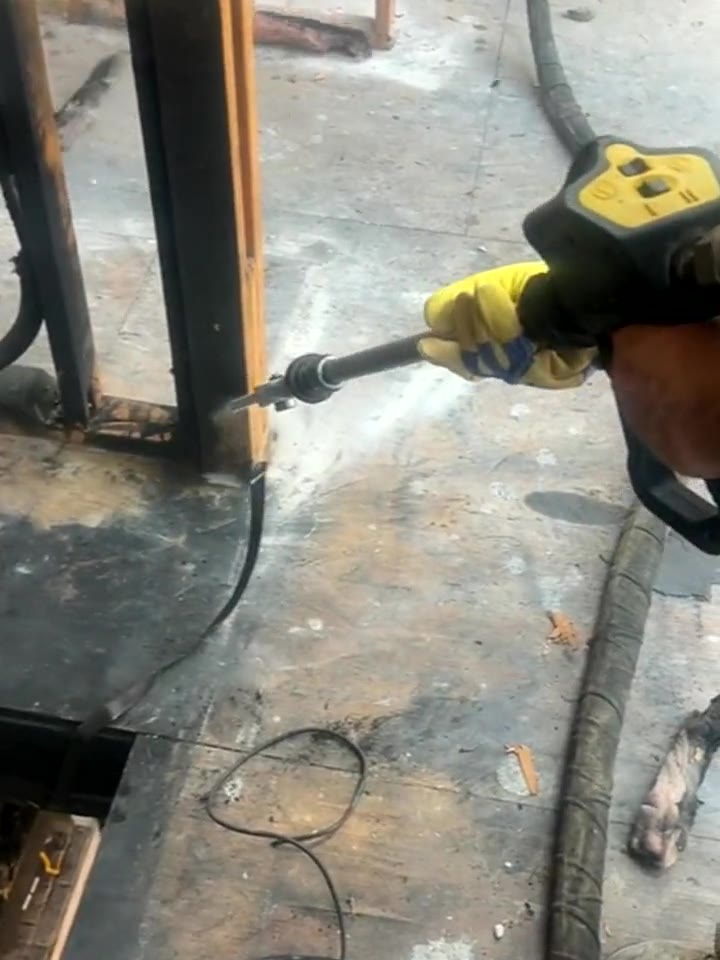
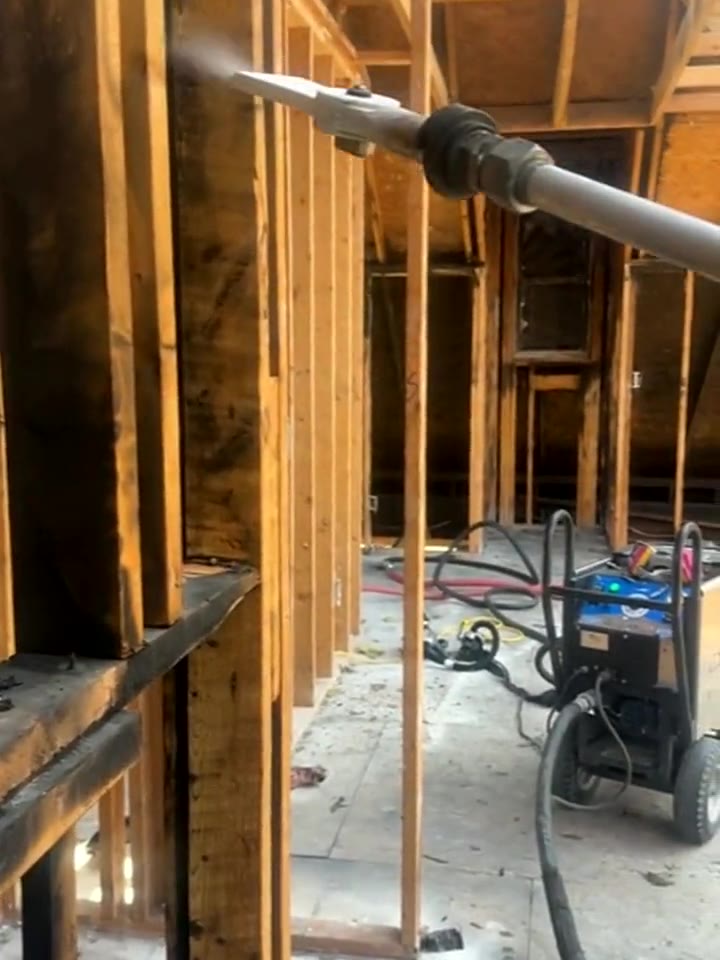
Dry ice takes soot and char off fire-damaged framing without putting water back into a structure that is being dried.
The soil
The method
Dry ice is the specialty method. It removes soot and char from framing, joists and steel without soaking a structure that's being dried, pulls residue out of open wood pore instead of sealing odor in, and leaves no media in every cavity of the building — unlike soda or sand.
Charred framing, blasted back to clean wood.
Fire-damaged studs and floor framing inside a structure. Dry ice takes the char and soot off the surface without water, so nothing gets wetter and the framing can be inspected and sealed the same day.
- No waterNo added moisture in a burned structure
- Reaches the cornersBetween studs, joists and blocking
- Smell goes with the sootChar removed, not painted over
Why it matters
The GC and the carrier are both paying for schedule. Dry ice can materially shorten the cleaning phase, and documented removal supports the estimate when the adjuster reviews it. See how dry ice blasting is priced.
Fire and smoke
Mold
Scope approval and Xactimate line items
Post-remediation verification
We sub to you.
Fire and water restoration companies call us for the part of the job that is slow by hand: soot and char on framing, joists, trusses and steel. You run the job and keep the customer. We bring the dry ice unit, clean the structure and get out of the way.
Your job, your customer
We work under your job and your schedule. The homeowner, the business and the claim stay with you.
No water, no media
Nothing added to a structure you are drying, and no soda or sand to vacuum out of every wall cavity afterward.
Documented removal
Before-and-after photos of the cleaned framing for your file and for the adjuster reviewing the estimate.
Have a fire job now?
Send photos or call, and we will tell you what it takes and when we can get there.
Fire damage soot blasting FAQ
What is soot blasting?
Soot blasting uses dry ice pellets to knock soot and char off fire-damaged wood, steel and masonry. The pellets turn to gas on impact, so there is no water and no grit left in the building, only the soot that came off.
Is dry ice blasting good for fire damage?
Yes, for framing, joists, decking, trusses and structural steel. It cleans without adding moisture to a structure that is drying, and it gets between studs and blocking where hand scrubbing is slow. Heavily charred wood may still need to be cut out; photos tell us which is which.
Does dry ice blasting remove smoke odor?
It removes the soot and char that hold most of the odor, instead of sealing it in. Your odor plan, sealing and clearance testing still apply after blasting.
Do you work as a subcontractor for restoration companies?
Yes. We sub to restoration contractors and general contractors on fire and smoke jobs. You keep the customer and the claim; we clean the framing and steel on your schedule.
Where in Mississippi do you do soot blasting?
Statewide from our base in Jackson, including the Gulf Coast, Hattiesburg and the Pine Belt, and North Mississippi and Tupelo. Send photos and the location for a free quote.